How Many 25L Bags of Soil in a Cubic Meters? A Comprehensive Guide
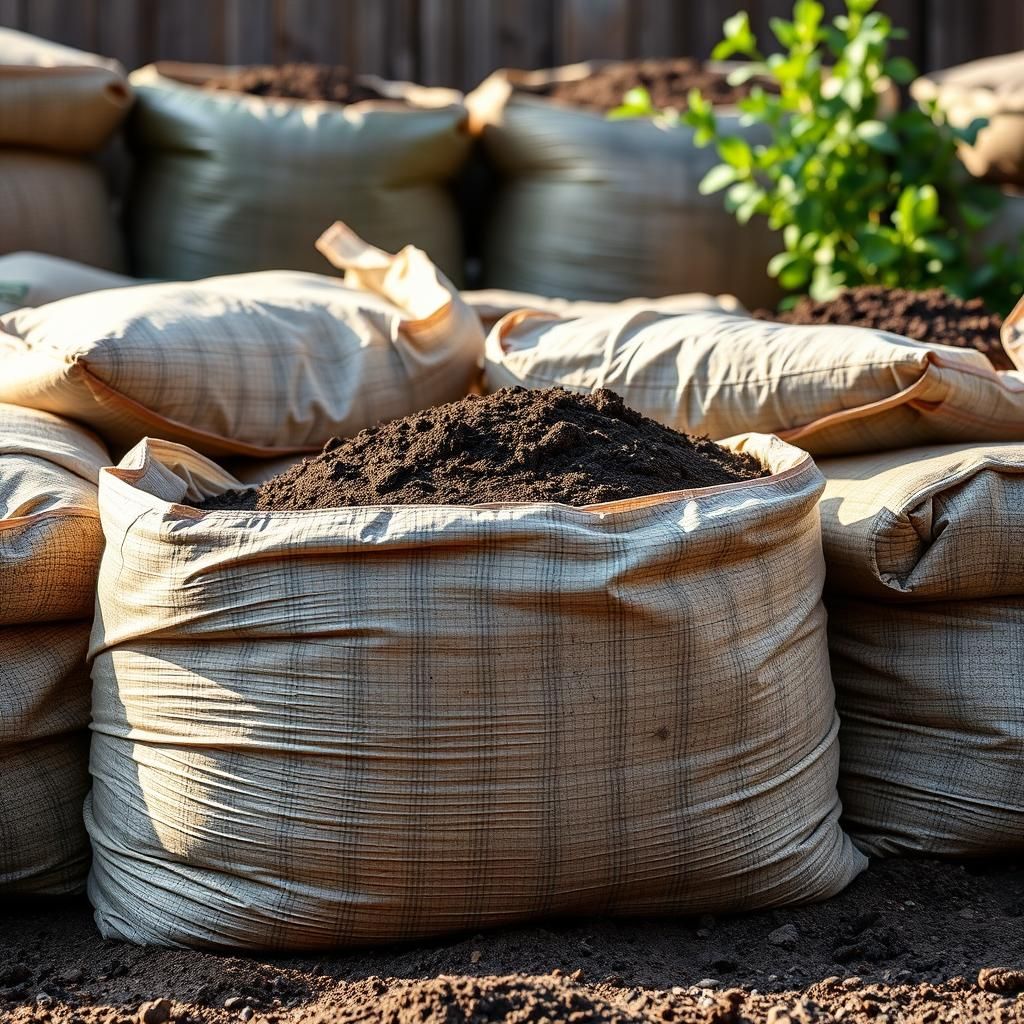
Understanding the conversion between liters and cubic meters is essential for anyone involved in gardening, landscaping, or construction. One common question that arises is, How many 25L bags of soil are needed to fill a cubic meter? This comprehensive guide aims to provide clarity on this topic, offering detailed calculations and practical insights. Whether you're planning a garden bed, filling pots, or tackling a larger landscaping project, knowing how to estimate the quantity of soil required can save time and resources. Join us as we break down the calculations and provide useful tips for your soil-related endeavors.
Calculating the Number of 25L Bags of Soil in a Cubic Meter
To determine how many 25-liter bags of soil fit into a cubic meter, one must first convert the measurements. A cubic meter (m³) is equivalent to 1000 liters. Therefore, to find the number of 25-liter bags in a cubic meter, simply divide 1000 by 25. The calculation reveals that there are 40 bags of 25 liters in a cubic meter. This conversion is crucial for gardeners and landscapers who need to calculate the amount of soil required for projects efficiently.
Understanding Cubic Meters
A cubic meter is a unit of volume in the metric system, represented as a cube with 1 meter on each side. It is commonly used in construction, landscaping, and logistics to measure large volumes of materials. By putting materials like soil into cubic meters, professionals can easily determine quantities required for specific projects, ensuring they have the correct amounts without waste.
Volume Conversion Basics
When working with volume, understanding metric conversions is essential. A liter is a unit that measures volume, and converting between liters and cubic meters involves knowing that 1 cubic meter equals 1000 liters. This fundamental relationship helps in contexts where large quantities of materials need to be converted into manageable bag sizes for transportation and application.
Calculating Soil Requirements
Calculating the amount of soil required for planting or landscaping depends on the dimensions of the area being worked on. By knowing that a cubic meter can hold 40 bags of 25 liters, one can quickly assess how many bags to purchase based on the volume of soil needed. For example, if a garden bed requires 2 cubic meters of soil, one would need 80 bags of 25 liters each to fill the space.
Practical Applications in Gardening
In gardening, knowing how many 25-liter bags fit into a cubic meter is particularly useful for selecting the right quantity of soil for raised beds, planters, and landscapes. For instance, if a gardener is setting up a new flower bed that is 2m in length, 1m in width, and 0.5m in depth, calculating the volume in cubic meters and understanding how many bags of soil are required ensures a successful planting operation without running short.
Cost Efficiency in Soil Purchase
Buying soil in bulk can be more economical than purchasing in small bags. Understanding how many 25-liter bags make up a cubic meter allows individuals and businesses to compare costs effectively. For instance, purchasing soil by the cubic meter may minimize packaging waste and reduce overall expenses, thereby promoting environmental sustainability and cutting down on costs associated with frequent bag purchases.
| Volume (m³) | Number of 25L Bags |
|---|---|
| 1 | 40 |
| 2 | 80 |
| 3 | 120 |
| 4 | 160 |
| 5 | 200 |
How many 25 liter bags of soil are in a cubic yard?
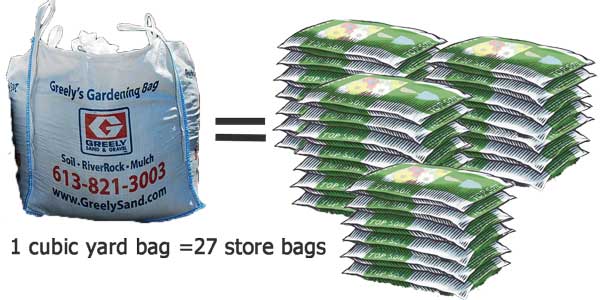
To determine how many 25-liter bags of soil are in a cubic yard, we first need to convert cubic yards to liters. A cubic yard is equivalent to approximately 764.55 liters. Therefore, to find out how many 25-liter bags fit into one cubic yard, we can perform the following calculation:
1. Calculate the total volume in liters for one cubic yard:
- 1 cubic yard = 764.55 liters
2. Divide the total volume by the volume of one bag:
- Number of bags = 764.55 liters / 25 liters per bag
- Number of bags = 30.582
This means that there are approximately 30.58 bags of soil in a cubic yard. Since you cannot have a fraction of a bag in practical terms, this would typically be rounded down to 30 bags of soil per cubic yard.
Understanding Cubic Yards
Cubic yards are a unit of volume measurement commonly used in landscaping, gardening, and construction. Understanding the cubic yard is important for calculating how much soil, mulch, or other materials are needed for a project. The cubic yard can be visualized as a cube with sides measuring one yard (three feet) in length.
- Definition: A cubic yard is the volume of a cube with edges measuring one yard in length.
- Applications: Used in landscaping, concrete, and soil measurements.
- Conversions: 1 cubic yard = 764.55 liters, 27 cubic feet.
Calculating Soil Volume
When you're dealing with soil, it's crucial to calculate the volume of soil needed accurately to avoid under or over-purchasing. The volume calculation will allow for proper coverage and depth. Soil volume can usually be calculated in cubic yards, liters, or by footprint area multiplied by desired depth.
- Area and Depth: Measure the area in square feet and multiply by the desired depth (in feet).
- Conversion: Convert your volume to cubic yards or liters for purchasing.
- Soil Density: Understanding soil density helps in determining weight and stability.
Bag Size Considerations
Bag size is another critical factor when purchasing soil. While many bags come in 25-liter increments, others may vary in size, which can impact your planning. Knowing the standard sizes and their conversions is essential for accurate estimates.
- Standard Sizes: Common bag sizes include 25 liters, 50 liters, and 1 cubic foot.
- Usage: Choose bag sizes based on project size and personal preference.
- Cost-Effectiveness: Larger bags may offer better value for larger projects.
Practical Applications in Gardening
In gardening and landscaping, understanding soil volume is vital for growth health. Different plants require varying amounts of soil, and knowing how many bags to buy can save both time and money. Furthermore, it ensures plants have the right environment for growth.
See also:
- Planting Beds: Calculate soil based on size and depth of planting beds.
- Container Gardening: Use appropriate volume per container for successful plant development.
- Soil Amendments: Regularly amend soil based on the type of plants being grown.
Purchasing Strategies
Purchasing the correct amount of soil involves planning and understanding local suppliers. When you know how many bags of soil you need for a cubic yard, it helps you to make informed decisions at the store.
- Local Suppliers: Check for local stores that may offer online pricing and availability.
- Bulk vs. Bags: Consider whether buying in bulk may be more economical for larger projects.
- Delivery Options: Evaluate the cost and feasibility of delivery versus pickup.
How much does 25l of soil cover?

To determine how much area 25 liters (25L) of soil can cover, we need to understand the density and texture of the soil, as these factors impact how deep the soil layer will be. Generally, when estimating coverage, soil is often measured in terms of depth (in centimeters or inches) over a certain area (in square meters or square feet).
Assuming a standard garden soil density of about 1,200 kg/m³ or 1.2 g/cm³, we can estimate coverage. When applying soil, a typical depth ranges from 5 cm (2 inches) to 10 cm (4 inches):
1. For a 5 cm (0.05 m) depth:
- Calculate volume in cubic meters:
[
25L = 0.025 m³
]
- Area covered:
[
Area = Volume / Depth = 0.025 m³ / 0.05 m = 0.5 m²
]
2. For a 10 cm (0.1 m) depth:
- Calculate area:
[
Area = Volume / Depth = 0.025 m³ / 0.1 m = 0.25 m²
]
Therefore, 25L of soil can cover approximately 0.5 m² at a 5 cm depth and 0.25 m² at a 10 cm depth.
Understanding Soil Density
The density of soil is a crucial factor when calculating coverage. Soil density is determined by its composition, which includes minerals, organic matter, and air. Different types of soil have varying densities:
- Sandy soil: Typically has a lower density due to higher porosity.
- Clay soil: Usually denser and retains more moisture.
- Loamy soil: A balanced mixture with a moderate density, ideal for gardening.
Factors Affecting Soil Coverage
Several factors can influence how much area a certain volume of soil can cover:
- Soil type: Different types of soil will compact differently, affecting how much area you can cover.
- Moisture content: Wet soil weighs more and can change the way it spreads.
- Application method: Raking, spreading, or layering can create variations in depth.
Application Depth Recommendations
When applying soil, it's essential to consider the depth for effective results:
- 5 cm depth: Good for topdressing and improving garden soil.
- 10 cm depth: Suitable for planting beds and establishing new gardens.
- Layered application: Multiple shallow layers can be beneficial for specific plants.
Calculating Coverage for Different Purposes
Calculating coverage can differ depending on the purpose for which the soil is being used:
- Garden beds: Requires deeper coverage for root development.
- Lawns: Typically needs a shallower layer for seeding.
- Landscaping: Variable needs based on design and plant selection.
Estimating the Amount of Soil Needed
When planning your garden, it’s important to estimate how much soil you will need:
- Measure area: Determine the total space you need to cover.
- Decide depth: Choose how deep of a layer you require.
- Calculate volume: Use the formula Volume = Area x Depth to find required liters.
How much will 1 cubic meter of soil cover?

1 cubic meter of soil can cover different areas depending on the depth at which it is applied. To calculate how much area 1 cubic meter of soil will cover, you can use the formula:
[
text{Area} = frac{text{Volume}}{text{Depth}}
]
Understanding Soil Volume
Soil volume is a critical measurement in gardening, landscaping, and construction projects. Knowing the volume helps in estimating how much soil is needed for a specific application.
- Definition: Volume refers to the amount of three-dimensional space occupied by the soil.
- Measurement: One cubic meter is equivalent to 1,000 liters or 35.3 cubic feet.
- Importance: Understanding soil volume is essential for ensuring adequate coverage and soil health in various projects.
Calculating Coverage Area
To understand how much area 1 cubic meter of soil will cover, you must factor in the depth you intend to apply it.
- For 10 cm depth: 1 cubic meter will cover 10 square meters.
- For 20 cm depth: 1 cubic meter will cover 5 square meters.
- For 30 cm depth: 1 cubic meter will cover approximately 3.33 square meters.
Applications of Soil Coverage
Soil coverage has various applications, ranging from gardening to landscaping. Different projects may require different depths of soil.
- Gardening: Typically requires shallow depths for planting and growing.
- Raised beds: Often use thicker layers of soil to ensure sufficient nutrient levels.
- Landscaping: May require varying depths based on the type of plants being used.
Types of Soil
The type of soil also influences how much area 1 cubic meter will cover. Different soils have varying densities, which affects the application.
- Sandy soil: Typically less dense, which may allow for greater coverage.
- Clay soil: More compact and heavier, resulting in less area coverage.
- Loamy soil: A balanced mixture that often offers good coverage and nutrient retention.
Local Regulations and Standards
In many regions, there are regulations regarding soil coverage for construction permits, landscaping designs, and agricultural practices.
- Permits: Some areas require permits for significant soil placements.
- Sustainability: Local guidelines often emphasize using organic or local soil sources.
- Environment: Consideration for local ecosystems may dictate coverage practices.
How big is a 25l bag of soil?
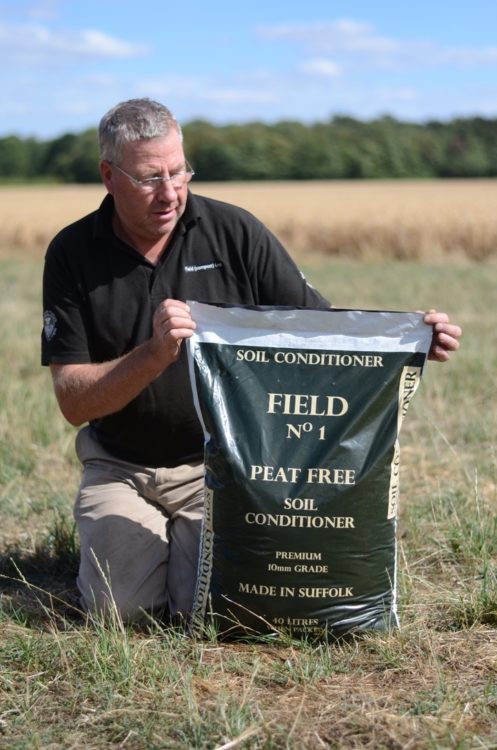
A 25-liter bag of soil is a specific volume of soil that is commonly used for gardening and landscaping purposes. To understand its size, it's essential to convert the volume measurement into more familiar dimensions. A liter is equivalent to 1,000 cubic centimeters, so a 25-liter bag contains 25,000 cubic centimeters of soil. This means the soil inside the bag is substantial enough to be used for various horticultural tasks.
In terms of dimensions, soil bags can vary in shape, but a common size for a 25-liter bag is approximately 40 cm wide, 60 cm long, and 15 cm high (or about 16 in x 24 in x 6 in). However, these dimensions can differ based on the bag design and manufacturer.
Understanding Volume in Liters
The concept of volume is crucial when dealing with gardening supplies, as it determines how much material is needed for specific tasks.
- Definition: Volume is the amount of space occupied by a substance, and in the case of soil, it's measured in liters.
- Conversion: 1 liter corresponds to 1,000 cubic centimeters (cm³), which is significant in understanding the size of multiple bags.
- Practical application: Knowing the volume helps in calculating how many bags are needed for planting or landscaping projects.
Common Uses for a 25L Bag of Soil
A 25-liter bag of soil serves various purposes in gardening, landscaping, and potting plants.
- Potting Plants: Ideal for filling pots and containers for indoor and outdoor plants.
- Vegetable Gardens: Provides the necessary nutrients and support for growing vegetables.
- Flower Beds: Used to enrich the soil in flower beds, promoting healthy growth and vibrant blooms.
Types of Soil Available in 25L Bags
Different types of soil are available in 25-liter bags, each designed for specific gardening needs.
- Potting Mix: Contains a mixture of peat, perlite, and other components, designed for container gardening.
- Topsoil: A rich layer of soil collected from the surface, often used for leveling and improving garden beds.
- Garden Soil: A blend of topsoil and organic matter, suitable for general gardening.
Weight Considerations for a 25L Bag of Soil
The weight of a 25-liter bag of soil can vary depending on its composition, usually ranging from 15 to 25 kg (about 33 to 55 lbs).
- Water Content: Wet soil weighs more than dry soil, affecting transport and handling.
- Composition: Different types of soil (e.g., sandy, clayey) have varying weights per volume.
- Transport Needs: Knowing the weight helps in planning for transport and storage, ensuring safe handling.
Storage and Handling of 25L Soil Bags
Proper storage and handling of soil bags are essential for maintaining soil quality and ease of use.
- Location: Store the bags in a dry location to prevent moisture from compromising the soil.
- Opening Bags: Use scissors or a knife carefully to cut open the bag, minimizing spillage.
- Disposal: After use, dispose of bags responsibly, recycling if possible, to reduce waste.
Questions from Our Readers
How many 25l bags of soil are there in a cubic meter?
To convert cubic meters to liters, remember that 1 cubic meter equals 1000 liters. Therefore, to find out how many 25-liter bags you need, divide 1000 by 25, resulting in 40 bags of soil per cubic meter.
Is it possible to use a different bag size for measuring soil?
Yes, you can use different bag sizes; however, you will need to recalculate the number of bags based on the size of the bag. For example, if you have a 50-liter bag, you would divide 1000 by 50, which would then yield 20 bags per cubic meter.
See also:
How do I calculate the amount of soil needed for my garden?
To determine the right amount of soil for your garden, measure the area in cubic meters and convert it to liters. Then, use the number of liters to find out how many 25-liter bags you will require using the method described in the first question.
Can I buy soil in bulk instead of bags?
Yes, many garden centers offer soil in bulk, which can be more cost-effective and environmentally friendly. When purchasing in bulk, you would typically buy cubic meters rather than individual 25-liter bags.

If you want to read more articles like How Many 25L Bags of Soil in a Cubic Meters? A Comprehensive Guide, we recommend you check out our Soil category.
Leave a Reply
Related Articles