Understanding Structural Behavioural and Physiological Adaptations: Key Insights and Implications
Understanding structural, behavioral, and physiological adaptations is crucial for comprehending how organisms interact with their environments and evolve over time. These adaptations, which include changes in morphology, behavior, and internal processes, enable species to survive and thrive under varying ecological pressures. This article delves into the key insights gained from studying these adaptations, highlighting their significance in fields such as ecology, evolutionary biology, and conservation. By exploring the mechanisms and implications of these adaptations, we can gain a deeper appreciation for the diversity of life on Earth and the intricate relationships that sustain it, ultimately informing conservation efforts and ecological management strategies.
- Understanding Structural, Behavioral, and Physiological Adaptations
- What are structural, behavioural, and physiological adaptations?
- What are 5 examples of structural adaptations?
- What is an example of physiological and behavioral adaptation?
- What are the three types of adaptation and examples?
- Questions from Our Readers
Understanding Structural, Behavioral, and Physiological Adaptations
Structural, behavioral, and physiological adaptations are essential mechanisms through which organisms efficiently interact with their environment, enhancing their survival and reproductive success. Structural adaptations involve physical features of an organism, such as the shape of a bird's beak or the insulation provided by fur, which enable them to thrive in specific habitats. Behavioral adaptations refer to the actions organisms take in response to their environment, exemplified by migration patterns in birds or hibernation in mammals to cope with seasonal changes. Lastly, physiological adaptations encompass the internal processes or functions that allow organisms to maintain homeostasis and manage their energy efficiently; for instance, some reptiles can alter their metabolic rates to survive in extreme temperatures. Together, these adaptations demonstrate the incredible diversity of life and the evolutionary pressures faced by organisms in ever-changing ecosystems.
Structural Adaptations
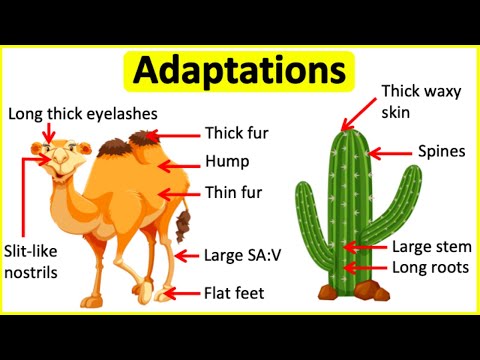
Structural adaptations involve the anatomy or morphology of organisms that help them survive in their specific environments. Examples include the long neck of a giraffe, which allows it to reach high leaves, or the thick skin of a camel that protects it from the harsh desert conditions. Such morphological features are crucial for effective resource access and shielding organisms from predators or environmental stresses, illustrating the diversity of life forms adapted to various habitats.
Behavioral Adaptations
Behavioral adaptations encompass the actions taken by an organism to enhance its survival. These can include migratory behaviors observed in certain bird species that travel great distances to find food or suitable breeding grounds, or social behaviors like pack hunting in wolves that improve their chances of successfully capturing prey. These learned and instinctual behaviors enable organisms to respond dynamically to environmental changes, optimize resource use, and facilitate reproduction.
Physiological Adaptations
Physiological adaptations pertain to the internal processes and functions that help organisms maintain homeostasis and manage their biological needs. An illustration includes the ability of certain fish to regulate their blood salt concentrations in varying salinity levels of water. Furthermore, certain mammals can enter a state of torpor to conserve energy during periods of food scarcity. These metabolic adjustments are vital during environmental fluctuations, ensuring survival under different conditions.
Examples of Adaptations in Various Species
Numerous species exhibit a blend of structural, behavioral, and physiological adaptations tailored to their unique environments. For instance, the Marsupial Mole has evolved to become nearly blind with a body designed for burrowing, while certain species of birds, like the Woodpecker, have developed strong, chisel-like beaks for drilling into trees. Each adaptation showcases the rich tapestry of evolutionary response to environmental pressures faced by different organisms over time.
The Role of Natural Selection in Adaptations
Natural selection plays a pivotal role in the development and retention of adaptations within species. Advantageous traits that increase an organism's chances of survival and reproduction become more common in successive generations. For instance, faster gazelles may escape predators more effectively, leading to greater survival rates and passing on their speed to offspring. This process of selective pressure shapes the adaptive landscape of various populations, ensuring ongoing evolution in response to varying environmental challenges.
| Type of Adaptation | Definition | Examples |
|---|---|---|
| Structural | Physical features of an organism | Giraffe's neck, Polar bear's fur |
| Behavioral | Actions taken by organisms in response to environment | Migratory patterns, Hibernation |
| Physiological | Internal processes for maintaining homeostasis | Metabolic rate adjustments, Thermoregulation |
What are structural, behavioural, and physiological adaptations?
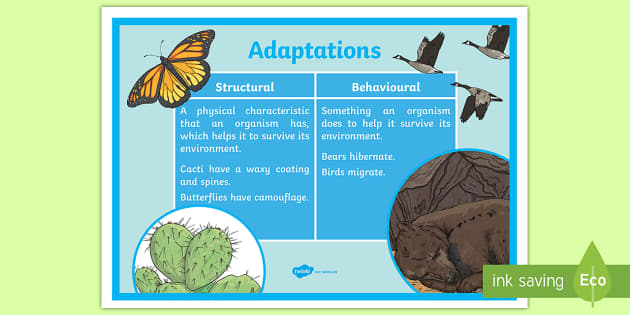
Structural, behavioural, and physiological adaptations are fundamental concepts in biology that explain how organisms survive and thrive in their environments. These adaptations enable species to fit into their ecological niches, overcome challenges, and ultimately contribute to their evolutionary success.
What are Structural Adaptations?
Structural adaptations refer to the physical traits of an organism that enhance its ability to survive and reproduce. These adaptations often involve changes in the body's morphology, including size, shape, and color. For instance, many animals have adaptations that help them blend into their environments, which is known as camouflage.
- Body Shape: The streamlined body of a dolphin aids in fast swimming through water.
- Coloration: The greenish color of a chameleon allows it to hide in foliage from predators.
- Specialized Structures: The long neck of a giraffe enables it to reach leaves high up in trees.
What are Behavioural Adaptations?
Behavioural adaptations encompass the actions that organisms take to survive in their environments. These behaviors can be instinctual or learned, and they are crucial for finding food, avoiding predators, and reproducing. Such adaptations can be observed in the way animals hunt, migrate, or communicate.
- Migratory Patterns: Many birds migrate thousands of miles to find food and suitable breeding grounds during different seasons.
- Social Behavior: Wolves hunt in packs to improve their efficiency in capturing prey.
- Feeding Strategies: Woodpeckers have developed a behavior of pecking at tree bark to find insects hidden within.
What are Physiological Adaptations?
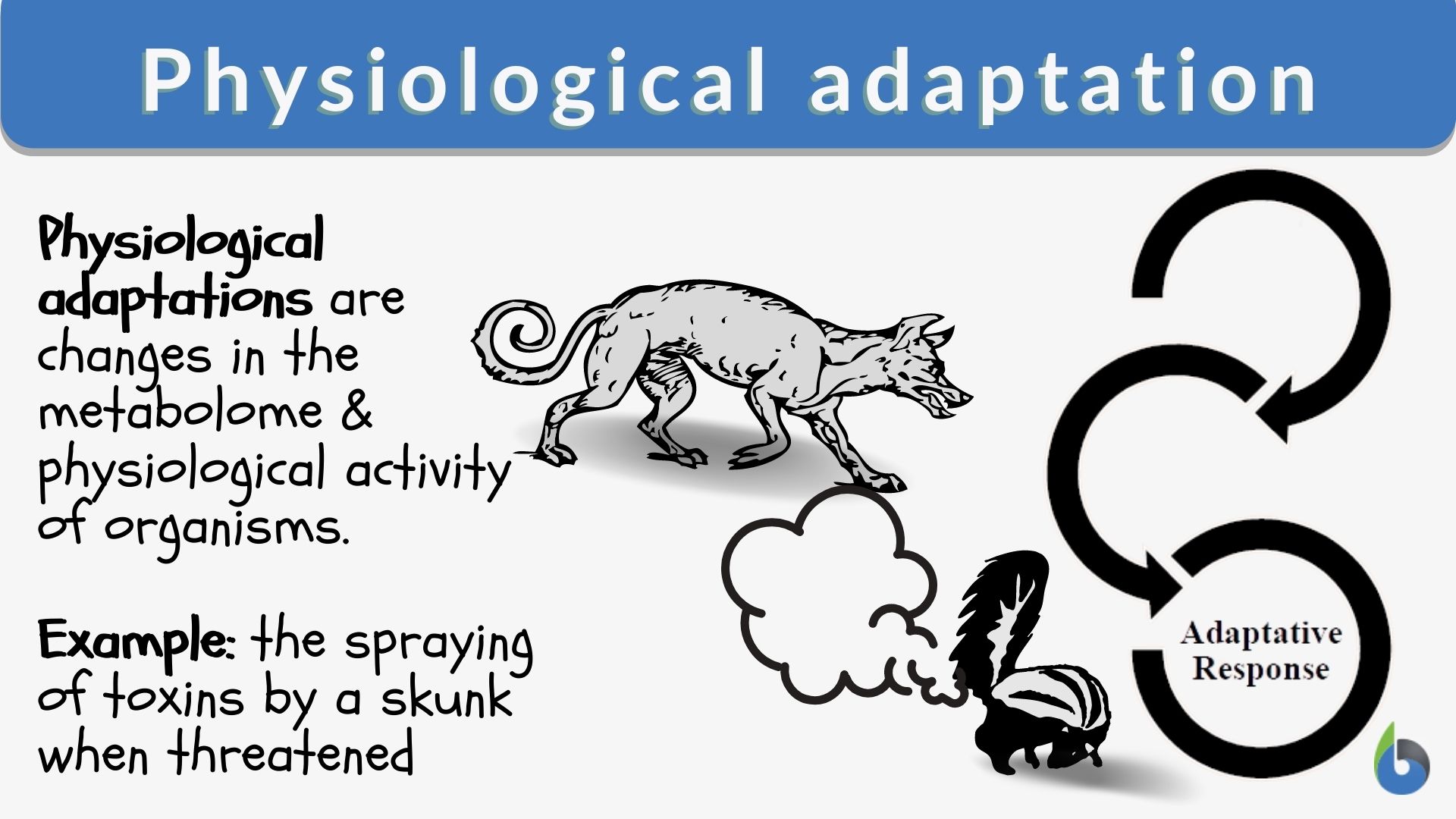
Physiological adaptations refer to the internal processes that enhance an organism's survival and reproduction. These adaptations can include changes in metabolic processes, thermoregulation, and responses to environmental stimuli. They often occur at the molecular or cellular level, allowing species to maintain homeostasis in varied environments.
- Metabolic Rates: Some animals can lower their metabolic rate during periods of food scarcity, allowing them to survive longer without food.
- Temperature Regulation: Certain species, like polar bears, have thick fur and a layer of fat for insulation against cold temperatures.
- Toxin Production: Many plants produce chemical compounds that deter herbivores from eating them.
Importance of Adaptations in Evolution
Adaptations play a critical role in evolution by enabling organisms to adjust to changes in their environments. This constant pressure often leads to the survival of those best suited to their habitats, reinforcing the idea of natural selection. Without adaptations, species might face extinction when confronted with environmental challenges.
- Environmental Changes: Species that can adapt quickly to changes in climate tend to survive better than those that cannot.
- Resource Availability: Adaptations allow organisms to exploit new resources efficiently, reducing competition.
- Predator-Prey Dynamics: As predators evolve better hunting strategies, prey species must adapt behaviors or structures to evade them.
Examples of Adaptations Across Different Species
Various species exhibit unique adaptations shaped by their specific ecological niches. These adaptations highlight the diversity of life on Earth and the various strategies organisms employ to thrive in their environments.
See also:
- Cacti: Store water in their tissues, allowing them to survive in arid climates.
- Arctic Fox: Changes its fur color and thickness with the seasons for camouflage and insulation.
- Frogs: Can have skin that secretes toxins to deter predators.
What are 5 examples of structural adaptations?

Structural adaptations are physical features of an organism that enhance its survival and reproductive success in its environment. Here are five exemplary structural adaptations:
1. Beaks of Birds: Different types of birds have developed various beak shapes and sizes based on their dietary needs.
- Finches: Some finches have short, sturdy beaks for cracking seeds, while others have long, slender beaks for probing flowers.
- Hummingbirds: Their long, narrow beaks allow them to access nectar deep within flowers.
- Woodpeckers: Their chisel-like beaks enable them to drill into tree bark to find insects.
2. Camouflage in Animals: Many animals possess body colors or patterns that blend into their surroundings, allowing them to avoid predation.
- Chameleons: With their ability to change skin color, chameleons can hide from predators and ambush prey.
- Arctic Fox: Its white fur in winter provides effective camouflage in snowy environments.
- Leaf-Tailed Geckos: These geckos are shaped and patterned like leaves, making them hard to spot in the forest.
3. Body Coverings: The type of covering an animal has can serve various functions, from protection to temperature regulation.
- Fur: Animals like bears and wolves have thick fur to keep warm in cold climates.
- Scales: Reptiles like snakes have scales that protect their bodies and reduce water loss.
- Feathers: Birds have feathers not only for insulation but also for flight and display.
4. Root Systems in Plants: Plants have adapted their root structures to access water and nutrients effectively.
- Taproots: Deep taproots, such as those seen in carrots, allow plants to reach underground water sources.
- Fibrous Roots: Grasses have dense, fibrous root systems that help in soil retention and prevent erosion.
- Aerial Roots: Some plants, like mangroves, develop aerial roots to obtain oxygen in waterlogged soils.
5. Size and Shape of Bodies: The overall size and configuration of an organism can be critical for survival and adaptation.
- Aquatic Animals: Fish have streamlined bodies that reduce water resistance, enhancing swimming efficiency.
- Camels: Their large size and fat-stored humps allow them to survive in arid desert conditions.
- Insects: Many insects have small, lightweight bodies that facilitate flight and mobility in their environments.
Beaks of Birds
Birds exhibit a wide variety of beak shapes as a result of structural adaptations to their feeding habits. The shape and size of a bird's beak are directly related to the type of food it consumes, showcasing how these adaptations impact survival. Beaks can be categorized based on functionality:
- Seed-cracking Beaks: Short, robust beaks for birds that feed primarily on seeds.
- Nectar-feeding Beaks: Long and slender beaks that allow access to nectar deep in flowers.
- Insect-catching Beaks: Sharp and pointed beaks for capturing insects on the wing or at rest.
Camouflage in Animals
Camouflage is a critical structural adaptation that helps many animals evade predators or become more effective hunters. This adaptation can manifest in various forms, including coloration, patterns, and body shapes. Here are three facets of camouflage:
- Coloration: Animals adapt their colors to mimic their surroundings, such as green for leaves or brown for soil.
- Body Shape: Some creatures evolve to resemble objects like leaves or twigs, creating natural disguises.
- Behavioral Camouflage: Animals may adopt stillness or specific postures to enhance their concealment.
Body Coverings
The type of protective covering an animal possesses can play pivotal roles in its survival by providing insulation, protection, and water retention. Coverings can vary dramatically among species:
- Furs: Thick furs help mammals regulate body temperature in extreme climates.
- Scaly Skin: Reptiles utilize scales to protect against environmental elements and retain moisture.
- Feathers: Birds have feathers that serve multiple purposes, including flight, warmth, and mating displays.
Root Systems in Plants
Structural adaptations in a plant’s root system can dramatically influence its ability to thrive in different habitats. Roots serve critical functions related to anchorage and nutrient absorption:
- Taproot Systems: Deep roots provide stability while accessing groundwater in arid environments.
- Fibrous Root Systems: They spread widely to efficiently capture surface moisture and nutrients from the soil.
- Specialized Roots: Certain plants, such as orchids, develop aerial roots for additional support and nourishment.
Size and Shape of Bodies
The dimensions and physical form of an organism frequently reflect its ecological niche and lifestyle. Various environmental pressures lead to specific adaptations in body size and shape:
- Streamlined Bodies: Found in aquatic species for minimized resistance during swimming.
- Large Body Size: Provides advantages in cold climates, as seen in large mammals, by retaining heat.
- Lightweight Forms: Many insects are small and agile, allowing efficient flight and rapid reactions to threats.
What is an example of physiological and behavioral adaptation?
An example of physiological and behavioral adaptation can be observed in the Arctic fox. This fox has developed several adaptations that enable it to survive in its harsh, cold environment. Physiologically, Arctic foxes have a thick, warm fur coat that insulates them against freezing temperatures, and they have a low surface-area-to-volume ratio to minimize heat loss. Behaviorally, Arctic foxes exhibit unique hunting strategies, such as caching surplus food and using their keen sense of hearing to locate prey beneath the snow.
See also:
Physiological Adaptations in Arctic Foxes
Physiological adaptations are the internal body changes that enhance an organism's ability to survive in a specific environment. In Arctic foxes, these adaptations include:
- Thick Fur Coat: Their dense fur traps heat and provides insulation against severe cold.
- Fat Reserves: Arctic foxes accumulate body fat that serves as an energy reserve during food scarcity.
- Body Size: Smaller ears and a stocky body shape reduce heat loss, an adaptation known as Bergmann's Rule.
Behavioral Adaptations in Arctic Foxes
Behavioral adaptations involve the actions and strategies an animal employs to cope with its environment. Arctic foxes display various behaviors that aid their survival, such as:
- Caching Food: They store surplus food in hidden locations to eat during winter when resources are minimal.
- Hunting Techniques: Their ability to listen for movements under the snow enhances their hunting success during winter.
- Social Behavior: During breeding seasons, they form monogamous pairs and work together for rearing their young.
Impact of Climate on Adaptations
Climate plays a crucial role in shaping the physiological and behavioral adaptations of Arctic foxes. As the climate changes, these adaptations may be affected:
- Changing Temperatures: Increased temperatures may lead to a reduction in their insulating fur, affecting their survival.
- Food Availability: Fluctuations in prey populations directly influence their caching behavior and hunting strategies.
- Habitat Changes: Melting ice and shifting ecosystems require adaptability in their foraging and migration patterns.
Comparison to Other Arctic Species
When examining Arctic foxes, it is insightful to compare their adaptations with other species in similar habitats:
- Polar Bears: They have larger body sizes and different hunting strategies, relying on sea ice for hunting seals.
- Snowy Owls: These birds have developed specialized hunting techniques and camouflage to blend into their snowy surroundings.
- Reindeer: They possess vascular adaptations in their hooves for traversing icy terrains, showcasing a different survival mechanism.
Role of Evolution in Adaptations
Evolution is the backbone of adaptations, defining how species like the Arctic fox develop traits to survive:
- Natural Selection: Traits beneficial for survival are passed down through generations, enhancing the population's adaptability.
- Genetic Variation: Variability within the population allows for different adaptations to be favored in changing environments.
- Speciation: Over time, adaptations can lead to the evolution of new species, further diversifying the Arctic ecosystem.
What are the three types of adaptation and examples?
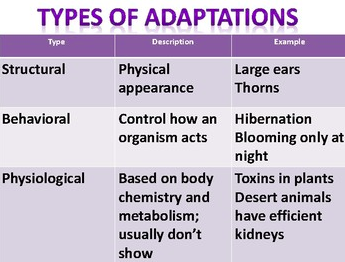
The three types of adaptation are structural, physiological, and behavioral adaptations. Each type represents a different way organisms adjust to their environments, enhancing their survival and reproductive success.
Structural Adaptations
Structural adaptations are physical features of an organism that enhance its ability to survive in its environment. These adaptations can include body shape, coloration, and types of limbs.
- Camouflage: Some animals, like the chameleon, have the ability to change their color to blend in with their surroundings, making it harder for predators to spot them.
- Body Size: In cold environments, animals like polar bears have larger bodies to conserve heat, maintaining a suitable internal temperature.
- Limbs: Birds like the ostrich have strong legs for running, while flippers in seals are adapted for swimming, showcasing how limb structure suits specific environments.
Physiological Adaptations
Physiological adaptations refer to the internal processes or functions of an organism that are modified to better suit their environment. These adaptations often result from evolutionary changes over generations.
- Temperature Regulation: Animals such as the Arctic fox can regulate their internal temperature, allowing them to survive in extreme cold.
- Metabolic Changes: Hibernating animals like bears significantly reduce their metabolic rates during winter months to conserve energy when food is scarce.
- Water Conservation: Desert animals, such as camels, have physiological mechanisms to minimize water loss and utilize water efficiently, often not needing to drink for long periods.
Behavioral Adaptations
Behavioral adaptations are actions or behaviors that organisms develop to respond to environmental challenges, helping them survive and reproduce.
- Mating Rituals: Many bird species, such as peacocks, perform elaborate courtship displays to attract mates, ensuring successful reproduction.
- Hibernation: Some animals, like ground squirrels, enter a state of hibernation in response to seasonal food shortages, practicing energy conservation.
- Migration: Birds such as geese migrate seasonally to find more abundant food sources and favorable climates, demonstrating a behavioral strategy for survival.
Questions from Our Readers
What are structural adaptations in animals?
Structural adaptations are physical features that enhance an organism's ability to survive in its environment. These can include elements such as body shape, size, coloration, and the presence of specialized structures like beaks or limbs that serve specific functions related to their habitat.
How do behavioral adaptations benefit animals?
Behavioral adaptations are activities or behaviors that organisms develop to improve their chances of survival and reproduction. These may involve mating rituals, hunting strategies, or social structures that help animals navigate their environment more effectively and respond to predators or changes in resources.
What are physiological adaptations and how do they work?
Physiological adaptations refer to the internal processes and functions that enhance an organism's survival in its environment. This can include mechanisms such as temperature regulation, metabolic changes in response to food availability, and the ability to produce toxins or venoms for defense or predation, which are vital for maintaining homeostasis.
Can you provide examples of each type of adaptation?
Certainly! An example of a structural adaptation is the camouflage of a chameleon, which helps it blend into its surroundings. A behavioral adaptation might be the migration of birds to warmer climates during winter. An example of a physiological adaptation is the ability of certain desert plants to store water efficiently to survive in arid conditions. These adaptations demonstrate the diverse ways organisms interact with their environments.
See also:
If you want to read more articles like Understanding Structural Behavioural and Physiological Adaptations: Key Insights and Implications, we recommend you check out our Gardeners category.
Leave a Reply
Related Articles